Commercial Waste Removal in Southfields
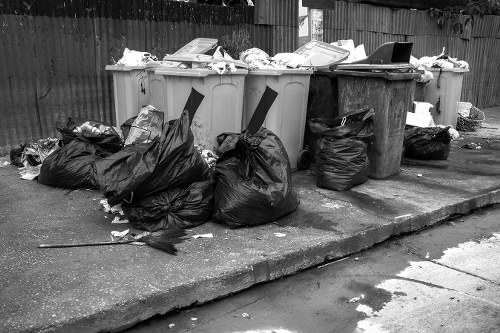
Commercial waste removal in Southfields should be straightforward, well planned and suitable for the type of waste your business produces. We handle regular and one-off clearances for shops, offices, hospitality premises, small trades and other workplaces that need their waste collected without disrupting day-to-day activity. The aim is to keep disposal practical, reduce clutter and move material on to the correct next stage, whether that involves sorting, recycling or disposal.
Our service is built around commercial waste streams that tend to build up quickly when premises are busy. That can include general business rubbish, packaging, broken furniture, office items, shop fittings and mixed non-hazardous material. We also understand that different premises need different timing and access arrangements, so work can be planned around opening hours, loading points and the layout of the building. If you want to compare options, see pricing and quotes for more detail, then ask for a quotation when you are ready.
Because commercial waste is not just a storage issue, the work needs to be handled with care from collection through to disposal. That means keeping items separate where possible, identifying anything that needs special handling and making sure the load is suitable for lawful transfer. If you only need a small amount removed, the same careful approach still applies. Clear communication about the material and the access point helps us plan the work properly, and it also helps you avoid unnecessary delay when the collection is arranged.
Business waste collections that fit around your premises
For many customers, the most useful option is a collection that fits around trading hours rather than interrupting them. We work with businesses that need waste taken away after a refit, following a stock change, or as part of a tidy-up before a handover. Office floors, back-of-house storage and shared service areas often gather mixed waste over time, so a planned collection can help restore usable space without the need for staff to deal with disposal themselves.
Business waste removal covers many of the jobs that arise in everyday trade, from routine clear-outs to periodic bulk collections. Depending on the material, the job may be easier if items are grouped in advance by type, such as cardboard, furniture, redundant equipment or loose bagged waste. If you are arranging a larger clearance, it can also help to note whether the waste is upstairs, in a basement, behind a counter or within a service yard, as that affects the practical plan for the visit.
Some collections are simple and quick, while others need a more measured approach because the waste is bulky, awkward or spread across different rooms. In those cases, the first step is to decide what should be removed, what must stay in place and whether anything needs to be handled separately. Good access and a clear scope make the process easier, but we can also work from a basic description when that is all you have available. Send a brief outline when you are ready and we can help take it from there.
Office waste removal for desks, furniture and equipment

Office waste removal often involves a mixture of light waste, office furniture and redundant items that no longer suit the workspace. Typical examples include desks, chairs, shelving, archive material, packaging and outdated fit-out items. In a busy office, these objects can accumulate after moves, reorganisations or equipment upgrades, so an organised collection makes it easier to keep corridors, meeting rooms and storage areas clear for daily use.
Where suitable, we can clear individual pieces or grouped items from one floor, multiple rooms or a designated storage point. Office clearance is useful when the job involves a broader reset of the working environment, while smaller removals can focus on specific items that are taking up space. The main advantage is that the waste is lifted and removed in one go rather than being moved around the building several times. That saves effort and helps reduce disruption for staff who still need to work in the space.
When planning office waste removal, it is sensible to think about the sequence of the job as well as the items themselves. Heavy furniture, loose paperwork, monitors and mixed waste each need different handling, and a careful approach helps keep the collection orderly. If you are making decisions about what to keep, what to recycle and what to remove, it is often better to do that before the collection day rather than during the visit. A short list can be enough to start the conversation.
Clearances for furniture, fittings and bulky items
Commercial premises often need furniture removed when rooms are refitted, tenants change or stored items are no longer suitable for use. We collect bulky items such as desks, cabinets, tables, shelving, reception pieces and other fittings that are difficult to move without support. This is especially helpful when premises need to be returned to a simpler layout or when broken furniture is making storage areas harder to use.
Furniture disposal is relevant where individual items or mixed batches need to be taken away responsibly. For larger volumes or when several rooms are involved, a broader furniture clearance may be the better fit. The practical difference is often scale: disposal can suit a few pieces, while clearance is more useful when the aim is to empty or substantially reduce the contents of a space. Either way, the focus stays on removing the items efficiently and making sure they are handled appropriately.
Furniture jobs are often easier when there is a clear path from the item to the exit and when people know what is staying behind. That matters because large items can obstruct doorways, lifts and shared access points if they are not moved in the right order. Measure twice, move once is a sensible principle here, especially for larger cabinets or awkward pieces. Where relevant, we can also take into account disassembly needs, but the final approach depends on the items involved and the layout on site.
Waste from refurbishment, building work and heavier clear-outs

Some commercial waste jobs are linked to building work, strip-outs or refurbishment rather than ordinary day-to-day rubbish. That can include mixed debris, broken fixtures, packaging from new materials and items removed during a workplace change. These jobs often need more planning than a standard tidy-up because the waste may be heavier, dustier or spread across a larger area. The priority is to remove it safely and keep the site usable as work continues.
Builders waste clearance is suitable where the waste comes from repair, refurbishment or fitting work and is not simply general office or shop rubbish. In some cases, the load may include timber offcuts, old fixtures, plasterboard fragments, metal parts or packaging from materials that have just been installed. The exact make-up of the waste matters because it affects how the collection is organised and how the load is handled after removal.
Jobs of this kind benefit from a clear understanding of what has been left on site and what should be moved. If there are particularly awkward items, tight access points or areas that should not be disturbed, that should be identified early. We can then plan the collection with those limits in mind and avoid unnecessary handling. Clarity at the start is often what keeps the job efficient, especially when the waste is mixed or spread out over more than one room.
About Southfields
Southfields is a residential district in the London Borough of Wandsworth, set in south-west London between Wimbledon to the south-west and Putney to the north-east. It is known for its grid of streets, period terraced housing and a strong sense of local shopping around Southfields Green and Southfields Underground station. The station opened in 1889 on the District line, and the area’s growth is closely tied to late nineteenth-century suburban development. Southfields has long been associated with Wimbledon tennis because the journey between the station and the All England Lawn Tennis Club is a well-used route during the Championships, and local streets regularly reflect that seasonal rhythm. The area also sits near several notable open spaces, including Wimbledon Park and King George’s Park, while the wider landscape is shaped by the River Thames to the north and the railway corridors that connect this part of London with the centre and south-west suburbs. Southfields Common, smaller parks and tree-lined roads give the neighbourhood a calmer character than some of the busier nearby commercial centres. Architecture varies from Victorian and Edwardian terraces to later flats and infill developments, creating a mixed townscape rather than a single uniform style. Everyday life is supported by local shops, cafés, schools and transport links, while the wider borough contributes civic, cultural and sporting landmarks that many Londoners recognise. The result is a place that feels distinctly local, yet remains closely connected to central and south-west London through its transport and historic residential growth.
How collections are planned and priced
When a business asks for a collection, the first useful information is usually the type of waste, the approximate amount and how easy it is to reach. Those details help shape the plan and make it easier to estimate the work properly. A single room of bagged waste is very different from a mixed clearance involving furniture, fixtures and items stored across more than one floor. The more clearly the job is described, the easier it is to suggest the right approach.
Contact us if you want to discuss a collection or request a quotation for waste removal in Southfields. If you would like to prepare before getting in touch, it can help to note the main items, whether access involves stairs or loading bays, and whether the waste is all in one place. For some customers, a simple written list is enough; for others, a brief description of the rooms involved gives a better picture. Either way, the aim is to make the enquiry concise and workable.
Book online only if you prefer to arrange the next step digitally and the job details are already clear. For more complex clearances, a short conversation is often the easiest way to confirm what needs removing and how the collection should be staged. One clear description is usually better than several partial updates, because it reduces the chance of misunderstanding and helps the work move forward smoothly.
Recycling, sorting and responsible disposal

Responsible commercial waste removal is not only about taking things away. It also involves deciding what can be separated, what should be directed towards recycling and what must be disposed of in the appropriate way. Mixed business waste can often contain paper, cardboard, plastics, metal, timber and general rubbish all in one load, so the sorting process is important. That is especially true where premises generate recurring waste and want a more considered approach rather than a simple throw-away collection.
Recycling and sustainability explains the sort of practical thinking that sits behind waste handling. Not every item can be recycled in the same way, and not every load is suitable for the same route, so the material itself matters. If your business wants to reduce the amount sent for disposal, it helps to identify common waste streams in advance, such as cardboard from deliveries, redundant office items or packaging from regular stock movements.
There is also a difference between general commercial waste and items that need special care because of their contents or condition. In those situations, the collection must match the material rather than treating everything as the same. We do not suggest that every job needs a detailed audit, but a sensible amount of sorting at source can make disposal cleaner and more efficient. Think in waste streams rather than just in piles of rubbish, and the overall process becomes easier to manage.
Special handling for restricted or awkward items
Not every commercial clearance consists of ordinary rubbish. Some premises have items that are awkward to shift, sensitive to breakage or unsuitable for general handling. That may include appliances, heavier components or material that needs extra caution before it is loaded. The aim is to identify these items early so that they are not mixed in with everything else and so that the collection can be handled safely and sensibly.
Fridge and appliance removal is relevant when businesses need larger electrical items taken away from kitchens, storerooms or staff areas. Where waste contains items that are particularly awkward, the main question is usually not simply how many there are, but what type they are and how they are positioned on site. If a collection also includes standard furniture or general waste, those streams can often be planned together while still treating the appliances properly.
There are situations where special handling is essential, and those should be identified before the collection is arranged. Do not mix items that need different treatment if you can help it, because separating them later is more complicated than planning the load in advance. If you are uncertain about whether something belongs with the main load, it is better to mention it early so the right approach can be chosen from the outset.
Practical preparation before the collection

Preparation does not need to be complicated, but a little organisation makes a noticeable difference. It is useful to decide which items are going and which should stay, especially if the waste is stored in several rooms or mixed with business equipment that is still needed. If possible, keep access points clear and make sure anyone on site knows what the collection includes. That helps avoid delays when the team arrives and reduces the chance of confusion.
When you ask for a quotation, it helps to mention anything that affects the work directly. Stairs, narrow corridors, shared entrances, loading restrictions or items stored behind counters all influence how the collection needs to be handled. It can also help to say whether the waste is bagged, loose, stacked or already gathered in one place. A short, accurate summary is more valuable than a long vague description, because it gives a clearer basis for planning the job.
For commercial waste removal in Southfields, the next step is simply to make the enquiry and outline what needs to go. If you already know the main items, keep that information to hand and ask for a quotation when you are ready. Request a quotation here and we will help you move the waste on in a way that suits your premises.